

Import-legal Cars Under the 25-Year Rule
The strategic collector needs to know what are import-legal cars under the 25-year rule in 2026.
It is the ultimate "market opener" for the Germany-to-US shipping corridor. Under NHTSA and DOT regulations, vehicles reaching their 25th anniversary are exempt from the costly and invasive modifications typically required by Registered Importers to meet federal safety standards.
However, we must emphasize that the law operates on a "Rolling Eligibility" basis. The distinction between "Model Year" and "Exact Date of Manufacture" is where most amateurs fail.
Model Year vs. Date of Manufacture: For import-legal cars under the 25-year rule eligibility is strictly determined by the exact month and year of production. A vehicle designated as a "2001 Model" but manufactured in August 2001 is not legal for entry until August 2026. Attempting to clear customs even a day early can result in the vehicle being impounded or crushed. Always verify the production month via the VIN plate or seatbelt tags before the ship leaves port.
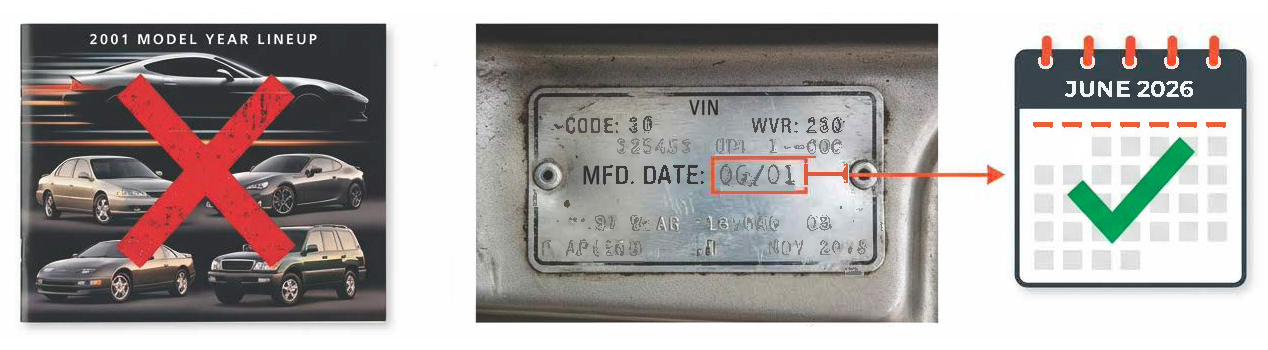
Technical Note: While the DOT requires 25 years for chassis compliance, the EPA provides a separate pathway for vehicles over 21 years old regarding emissions-system equivalency. In practice, while your 2001 engine is technically "clean" by 2022, you must wait for the 25-year DOT clock to expire to clear the chassis for road use without the 25% tariff penalty.
The "Class of 2001" represents the transition from analog purity to the digital age. Demand will peak in early 2026. By securing a vehicle months before its eligibility date, you can lock in pricing before the market reacts to its legal status.
The JDM Icons: Godzilla, Evos, and Type Rs
The Japanese Domestic Market (JDM) legends arriving in 2026 represent the "Gentleman’s Agreement" era—where manufacturers officially capped output at 276 hp on paper, while in reality, these machines were pushing well north of 300 hp.
Import Justification: Named after chief engineer Mizuno, this is the "bougie" premium Godzilla. Eligible starting May 2026, only 366 units were produced. It features luxury heated leather seats and specialized "Ripple Control" dampers for endurance-focused driving. Most notably, it comes in the exclusive "Silica Brass" paint—a color so unique it was famously mistranslated as "Silica Breath" in early Gran Turismo games.

European Masterpieces: From Analog Supercars to Quirky Daily Drivers
The European market of 2001 was defined by engineering audacity, from the last of the analog V12s to the experimentation of French "Coupe-MPVs."
The Analog Legends
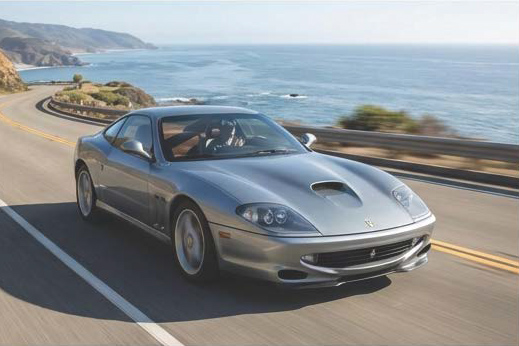
The pinnacle of front-engine V12 GT supremacy. With a naturally aspirated 5.5L engine and a gated manual shifter, it is the last Ferrari to prioritize driver skill over electronic intervention. Using the 25-year exemption on a 550 can save you $70,000 in tariffs alone.
The German Staples
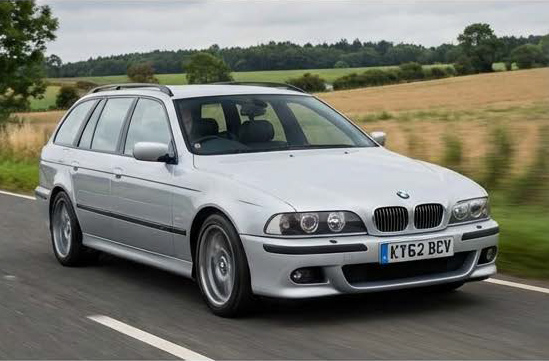
Sourcing from Germany often yields "cleaner" configurations and meticulous service records.2026 opens the door for the Euro-only Touring (wagon) and Diesel variants. These offer a blend of "chassis perfection" and utility that remains a benchmark.
French Force & Innovation
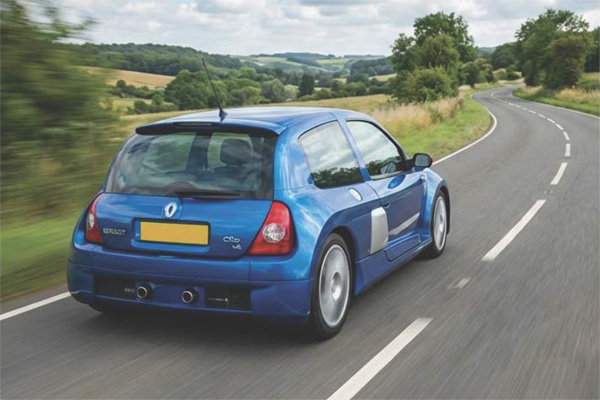
A mid-engine, rear-wheel-drive hatchback built by Tom Walkinshaw Racing (TWR). It’s a tiny two-seater with a 3.0L V6 where the back seats should be. As we say in the industry, this car is "actively trying to kill you," which is exactly why it’s a design icon.
The Financial Advantage: Tariffs, Compliance, and Hidden Savings
Importing a 25-year-old classic is a high-yield financial maneuver. The HTS 9903.94.04 classification acts as your shield, protecting the asset from the 25% Section 232 tariffs that cripple modern imports.
Financial Impact Analysis:
For a high-value asset like the Ferrari 550 Maranello (valued at ~ $280,000 ), avoiding the Section 232 tariff alone saves the collector round about $70,000. Total realized savings often exceed $100,000 when compliance and "Chicken Tax" avoidance for JDM utility vehicles are factored in.
Logistics and Sourcing: Ensuring a Seamless Transit
Navigating transatlantic transit requires more than a shipping quote; it requires an asset protection strategy.
- Sourcing and Verification: Verify the production month via the VIN plate or seatbelt tags. If you rely on the title alone, you risk the car being impounded.
- Customs & Documentation: You must have the Original Title, Bill of Lading, EPA Form 3520-1, and DOT Form HS-7. Proper classification under HTS 9903.94.04 is the only way to secure the tariff exemption.
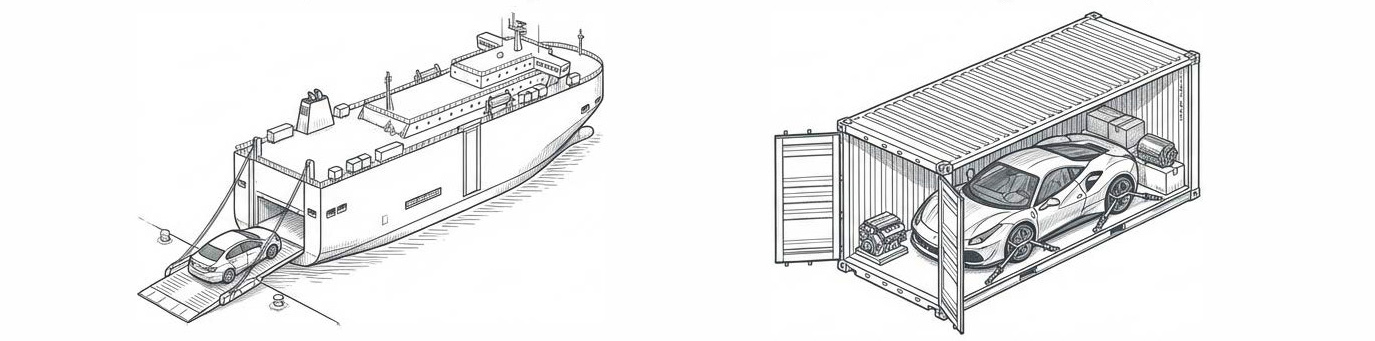
Roll-on/Roll-off (RoRo):
Best for "Practical Classics" like the Honda CR-V or Volvo V70.
Pros: Cost-effectice, reliable .
Process: Vehicles are driven onto the vessel and secured to the deck.
Container:
Non-negotiable for high-value assets. Enclosed protection to shield against the maritime environment and handling damage.
Pros: Premium security, sealed environment.
Process: Vehicles are loaded "their own" container, allows shipping of attachments and extra parts.
As your specialized partner, we ensure your enthusiast car arrives safely, legally, and with every tax advantage secured.
FAQ
Einfach auf die Frage klickenWhen exactly can I import a 2001 model car?
Eligibility follows the manufacture date. If a car was built in March 2001, it is eligible in March 2026. Do not ship early; CBP does not offer "grace periods."
What is the "M-Spec" Skyline and why wait for it?
It is the refined, luxury-spec R34 GT-R. With only 366 units, Ripple Control dampers, and the "Silica Breath" paint, it is a blue-chip investment that becomes eligible starting in May 2026.
Can I import a car to California?
While federally legal at 25 years, California has unique emissions and registration hurdles. Federal eligibility does not equate to an automatic California title.
How much can I save on taxes?
Using the HTS 9903.94.04 classification saves you the 25% Section 232 tariff. On a $200,000 Ferrari or Skyline, that would be a $50,000 saving.
What are "Practical Classics"?
These are high-utility imports like the First-Gen Honda CR-V, famous for its integrated cargo-floor picnic table and bulletproof B20 engine, or the Volvo V70 Typ L, prized for its turbocharged performance and 40+ mpg Euro-diesel variants. These offer a low-cost, high-reliability entry into the import market.
Learn more on reddit or JALOPNIK
Visit the "official" sources: U.S. Customs and Border Protection (.gov) or NHTSA
Disclaimer:
The information provided in this update reflects the situation as of the date of publication. Trans Global Logistics Europe makes no representations or warranties of any kind regarding the accuracy, completeness, or currentness of this information. This publication is for general informational purposes only, does not constitute legal or binding logistical advice, and does not create any contractual obligations. Any liability for actions taken based on this information is expressly excluded.
Die in diesem Artikel bereitgestellten Informationen spiegeln den Stand zum Zeitpunkt der Veröffentlichung wider. Trans Global Logistics Europe übernimmt keine Gewähr für die Richtigkeit, Vollständigkeit und ständige Aktualität der Angaben. Dieser Beitrag dient ausschließlich allgemeinen Informationszwecken, stellt keine rechtliche oder verbindliche logistische Beratung dar und begründet keine vertraglichen Verpflichtungen. Jegliche Haftung für Handlungen, die auf Basis dieser Informationen unternommen werden, wird ausdrücklich ausgeschlossen.